Coleus
Plectranthus scutellarioides
Más nevek: painted nettle, flame nettle
Coleus (Plectranthus scutellarioides) is a colorful-leaved evergreen perennial plant widely grown as an ornamental. It is popular for its vibrant foliage with various patterns and shades.
Basic info
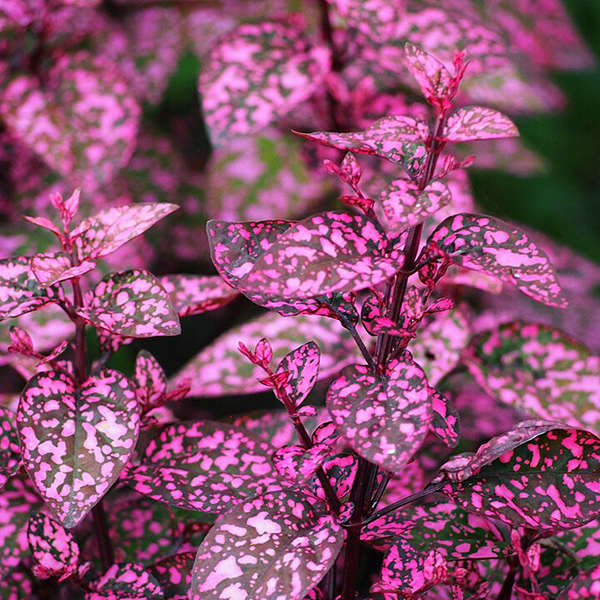
Coleus is a perennial plant native to Southeast Asia, belonging to the mint family (Lamiaceae). It grows moderately fast with a bushy, spreading habit, reaching heights and widths of 30-60 cm. Its main ornamental value lies in its colorful leaves, which display a wide range of patterns and hues from green to burgundy and purple. The flowers are small, usually purple or violet, blooming from summer to autumn. Coleus prefers partial shade, where its leaf colors remain vivid.
This plant is frost-sensitive and requires protection in colder climates. It thrives in well-drained, nutrient-rich, slightly acidic to neutral soils. Regular watering is necessary, but waterlogging must be avoided. Maintenance is moderate, including pruning and fertilization to keep the plant healthy and attractive.
Propagation is mainly by cuttings taken in spring or summer, which root easily. Coleus is suitable as a houseplant, balcony plant, or for shaded garden areas. Its flowers attract bees and butterflies, supporting pollinators in the garden.
Size & appearance
Environment needs
Care
Caring for coleus involves providing partial shade to avoid direct harsh sunlight that can damage leaves. The soil should be loose, well-draining, and nutrient-rich. Water regularly to keep the soil moist but not waterlogged. Monthly feeding with balanced liquid fertilizer supports growth. Prune after flowering or as needed to maintain shape and encourage bushiness. In winter, keep the plant in a frost-free, bright location with reduced watering.
Propagation
Coleus is easily propagated by stem cuttings taken in spring or summer. Place cuttings in moist soil or water to root quickly. Seed propagation is less common and slower.
Diseases & pests
Coleus can suffer from root rot and leaf spot diseases, mainly due to overwatering. Pests such as aphids and spider mites may also attack. Proper care and avoiding excessive moisture help prevent these issues.
Ehhez a növényhez még nincs betegség/kártevő információ rögzítve.
Safety
Coleus is non-toxic to humans, dogs, and cats, making it safe for indoor and outdoor cultivation. It generally does not cause allergic reactions.
Ecology
The flowers of coleus attract bees and butterflies, contributing to pollinator support. It is not invasive and poses no threat to natural habitats.
Usage
Coleus is primarily used as an ornamental plant indoors, on balconies, or in shaded garden spots. Its colorful foliage adds decorative appeal and pairs well with other shade-tolerant plants. It is not edible and has no known medicinal uses.