Dracaena
Dracaena
Más nevek: dragon tree, corn plant
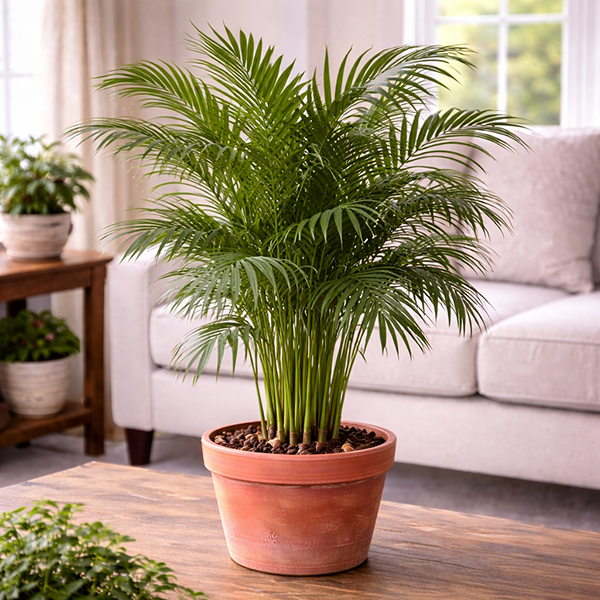
Dracaena is an evergreen shrub or small tree commonly grown as an ornamental houseplant. It features long, narrow leaves often variegated with stripes or colors, and adapts well to indoor environments.
Basic info
The genus Dracaena includes tropical and subtropical plants native to Africa, Asia, and Madagascar. These plants are typically woody shrubs or small trees with evergreen foliage. Their leaves are long and lance-shaped, often striped with white, yellow, or red. Dracaenas produce small, white to creamy flowers in summer, followed by small berry-like fruits that are usually red or orange.
Dracaenas prefer partial shade and tolerate indoor conditions well, requiring moderate watering. They are not very demanding regarding soil but need good drainage. Sensitive to frost, they should be kept indoors or in frost-protected areas during cold seasons. Propagation is commonly done by stem cuttings, which is a moderately difficult process.
It is important to note that Dracaena plants are toxic to humans and pets if ingested, so care should be taken around children and animals. However, their flowers attract bees and other pollinators, making them ecologically valuable.
Size & appearance
Environment needs
Care
Dracaena care is relatively simple. They prefer bright but indirect light, as direct sunlight can scorch their leaves. Water moderately, allowing the topsoil to dry out between waterings. Fertilize monthly during spring and summer with a balanced liquid fertilizer. Reduce watering in winter and keep the plant in a frost-free, bright location. Pruning occasionally in spring or early summer encourages bushier growth.
Propagation
Propagation is mainly through stem cuttings taken in spring or early summer. Cuttings can be dipped in rooting hormone and planted in a loose, well-draining medium. Keep cuttings warm and humid to encourage rooting. Leaf cuttings are possible but more difficult and slower.
Diseases & pests
Dracaenas are relatively resistant but can suffer from leaf spot, root rot due to overwatering, and pests like spider mites and scale insects. Proper watering and regular leaf cleaning help prevent these issues.
Ehhez a növényhez még nincs betegség/kártevő információ rögzítve.
Safety
All parts of the Dracaena plant are toxic to humans and pets if ingested, causing vomiting, drooling, and digestive issues. Keep away from children and animals.
Ecology
Dracaena flowers attract bees and other pollinators, supporting local ecosystems. They are non-invasive and pose no threat to natural habitats.
Usage
Dracaenas are popular ornamental plants for indoors, balconies, and offices due to their tolerance of low light and variable conditions. Besides their aesthetic appeal, they also help purify indoor air.