gerbera
Gerbera jamesonii
Más nevek: gerbera daisy, African daisy
Gerbera is a vibrant perennial ornamental plant known for its large, colorful flowers. It blooms from spring to autumn and is popular as a houseplant and cut flower.
Basic info
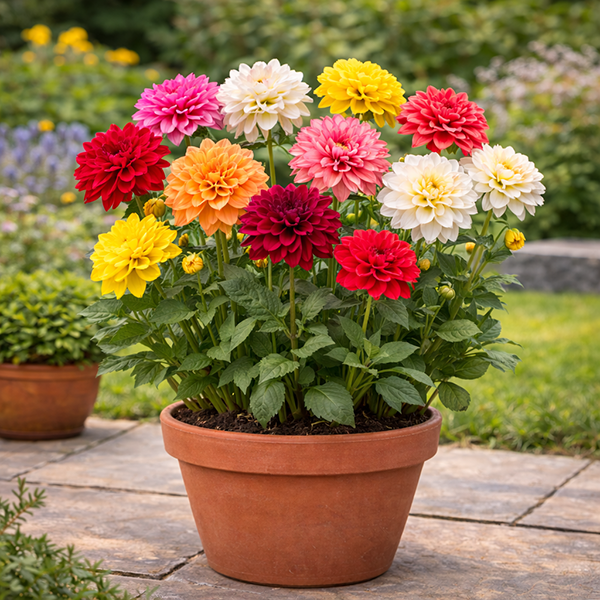
Gerbera (Gerbera jamesonii) is a perennial plant native to South Africa, belonging to the Asteraceae family. It features large, brightly colored flowers in shades of red, orange, yellow, pink, and white. The plant forms a bushy habit with elongated, slightly serrated leaves that are deciduous.
Gerbera prefers sunny, bright locations and moderate watering. It thrives in well-drained, nutrient-rich soil with a neutral to slightly acidic pH. Being frost-sensitive, it requires protection or indoor overwintering in colder climates.
Widely cultivated as an ornamental plant, gerbera is grown indoors, on balconies, and in gardens. Its flowers are also popular as cut flowers due to their long-lasting freshness. Care requires moderate attention, including regular watering, fertilization, and removal of spent blooms.
Size & appearance
Environment needs
Care
Gerbera requires a sunny spot with plenty of light. Water regularly but avoid waterlogging to prevent root rot. Fertilize monthly, especially during the flowering period. Remove faded flowers to encourage new blooms. Overwinter in a frost-free, bright location.
Propagation
Gerbera can be propagated by seeds or division. Sow seeds in spring when temperatures are suitable for germination. Division is best done in early spring or autumn during dormancy. Propagation by cuttings is possible but less common. The process requires moderate skill and care.
Diseases & pests
Gerbera is susceptible to fungal diseases like powdery mildew and root rot, especially if overwatered or grown in poorly drained soil. Pests such as aphids and thrips may also affect it. Proper care and good ventilation help prevent diseases.
Ehhez a növényhez még nincs betegség/kártevő információ rögzítve.
Safety
Gerbera is non-toxic to humans, dogs, and cats, making it safe to keep around children and pets. It is non-allergenic and suitable for allergy sufferers.
Ecology
Gerbera flowers attract bees and other pollinators, supporting local ecosystems. It is not invasive and does not spread aggressively in natural habitats, making it safe for garden cultivation.
Usage
Gerbera is primarily used as an ornamental plant indoors, in gardens, and on balconies. Its colorful flowers are also popular as cut flowers for decoration and events.