Winter Daphne
Daphne odora
Más nevek: Fragrant Daphne
Daphne odora is a semi-evergreen, slow-growing shrub known for its highly fragrant flowers. It blooms in winter to early spring, making it a prized ornamental plant.
Basic info
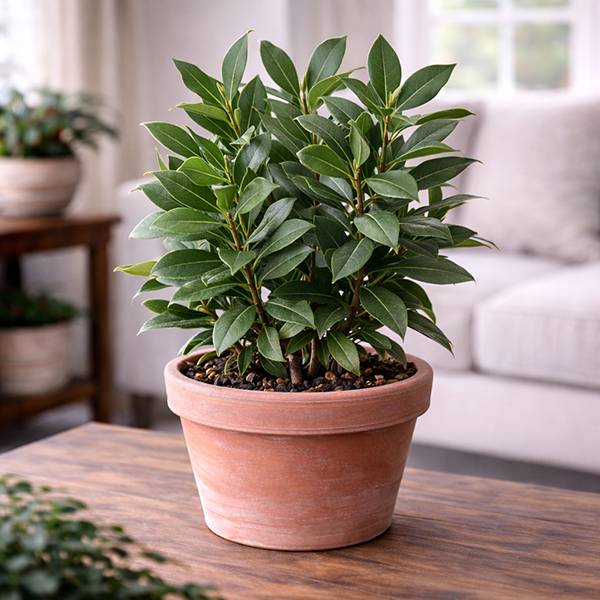
Daphne odora is a compact, bushy shrub growing between 60 and 150 cm tall and wide. Its leaves are semi-evergreen, dark green, and glossy, providing year-round interest. The flowers are pink or white and very fragrant, blooming from January to March, offering a special winter garden display.
The plant produces small, red berries that are toxic, so caution is advised around children and pets. It prefers partial shade and tolerates urban environments well but is sensitive to waterlogging and severe frost.
Care is straightforward with low pruning needs and moderate watering, avoiding water stagnation. Fertilizing in spring and autumn helps maintain health. Propagation is typically by cuttings or division, with moderate difficulty.
Size & appearance
Environment needs
Care
Winter Daphne prefers partial shade with well-drained, humus-rich soil. It requires regular but moderate watering, especially in summer. Pruning is minimal and best done after flowering. In colder climates, winter protection such as mulching or sheltering from wind is recommended.
Propagation
Propagation is mainly by semi-hardwood cuttings in summer, but division and seed sowing are also possible. Cuttings should be planted in well-draining soil and kept humid for rooting. Seed propagation is slower and more challenging.
Diseases & pests
The plant can be susceptible to root rot if overwatered and may be attacked by aphids and mites. Proper care and ventilation help prevent these issues.
Ehhez a növényhez még nincs betegség/kártevő információ rögzítve.
Safety
All parts of Daphne odora are toxic, especially the berries. Ingestion is dangerous for humans and pets, so handle with care around children and animals.
Ecology
The flowers attract bees and other pollinators, playing an important role in winter to early spring pollination. It is not invasive and poses no threat to local ecosystems.
Usage
Popular as an ornamental shrub due to its fragrant flowers. Suitable for garden hedges in partial shade. Not recommended for indoor cultivation.