Kentia Palm
Howea forsteriana
Más nevek: Howea forsteriana, Paradise Palm
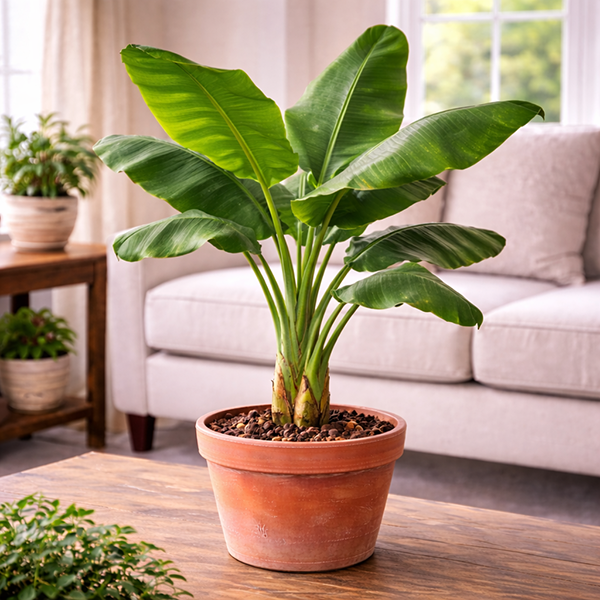
The Kentia Palm (Howea forsteriana) is a slow-growing, elegant evergreen palm native to Lord Howe Island. It is a popular indoor plant that thrives in partial shade and requires moderate watering.
Basic info
The Kentia Palm is a tall, columnar palm that can reach up to 12 meters in its natural habitat but remains smaller indoors. It features long, arching dark green fronds that provide a graceful appearance year-round. The palm produces greenish-white flowers in spring and early summer, followed by small brown berry-like fruits.
This palm grows slowly and prefers partial shade, avoiding direct sunlight. It thrives in loose, well-drained, nutrient-rich soil with a slightly acidic to neutral pH. The Kentia Palm is frost sensitive and should be protected from cold temperatures below 10°C.
It adapts well to indoor environments, making it a favored choice for homes, offices, and patios. Care requires moderate attention, especially regarding regular watering and fertilization.
Size & appearance
Environment needs
Care
Kentia Palm requires regular but moderate watering to keep the soil slightly moist without waterlogging. It prefers partial shade with no direct harsh sunlight. Fertilize biweekly during spring and summer with a balanced palm fertilizer. Remove dead fronds as needed to maintain plant health. During winter, maintain temperatures above 10°C and reduce watering.
Propagation
Propagation is done by seed, which can take several months to germinate. Sow seeds in spring or summer in well-draining soil and keep in a warm, humid environment. Patience is essential due to slow germination.
Diseases & pests
The Kentia Palm is generally resistant to pests and diseases but can occasionally suffer from scale insects, aphids, or fungal infections if overwatered or poorly ventilated. Proper care and leaf cleaning help prevent issues.
Ehhez a növényhez még nincs betegség/kártevő információ rögzítve.
Safety
The Kentia Palm is non-toxic to humans and pets, making it safe for households with children and animals.
Ecology
In its native habitat on Lord Howe Island, the Kentia Palm plays an important ecological role by providing habitat for various insects and birds. Indoors, it poses no ecological risk.
Usage
Primarily used as an ornamental plant, the Kentia Palm is popular in interior design for its decorative appeal and air-purifying qualities. It can also be grown outdoors in warm climates with shaded locations.