Monstera adansonii
Monstera adansonii
Más nevek: Swiss cheese vine, Five holes plant
Monstera adansonii is a tropical evergreen climbing plant known for its distinctive perforated leaves. It thrives in bright, indirect light and is popular as a houseplant.
Basic info
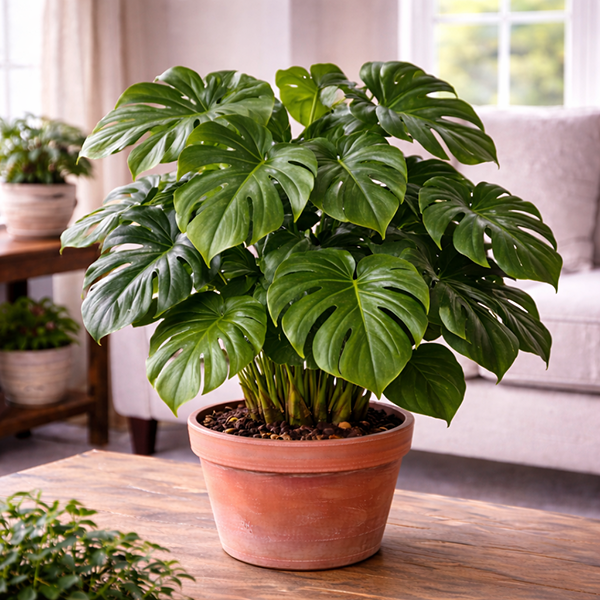
Monstera adansonii belongs to the Araceae family and is native to the tropical rainforests of Central and South America. This evergreen climber is famous for its unique heart-shaped leaves with natural holes, earning it the nickname 'Swiss cheese plant'. The holes allow light and air to pass through, an adaptation to its natural environment.
The plant can grow up to 3 meters long, using aerial roots to cling to tree trunks. It produces white flowers, though flowering is rare indoors. The fruit is edible but not commonly consumed.
As a houseplant, Monstera adansonii is favored for its ease of care and decorative appeal. It prefers bright, indirect light and requires regular watering while avoiding waterlogging. During winter, watering should be reduced and temperatures kept above 15°C.
Proper soil, fertilization, and occasional pruning help maintain its health and shape. Propagation is easily done through stem cuttings, making it popular among plant enthusiasts.
Size & appearance
Environment needs
Care
Monstera adansonii thrives in bright, indirect light but should be protected from direct sunlight. Keep the soil consistently moist but not soggy to prevent root rot. It prefers high humidity, so misting the leaves occasionally is beneficial. Fertilize biweekly during the growing season with a balanced liquid fertilizer.
Prune in spring or early summer to remove dead or overly long stems. In winter, reduce watering and maintain temperatures above 15°C.
Propagation
Propagation is easiest through stem cuttings. Cut a 10-15 cm stem with at least one aerial root or node. Place the cutting in water or moist soil in a warm, bright spot. Roots develop within weeks, after which the cutting can be potted.
Diseases & pests
Monstera adansonii is susceptible to root rot if overwatered. Pests like aphids, spider mites, and powdery mildew can occur, especially in dry conditions. Regular inspection and proper care help prevent these issues.
Ehhez a növényhez még nincs betegség/kártevő információ rögzítve.
Safety
Monstera adansonii is toxic to humans and pets if ingested. Its sap can cause skin irritation. Keep out of reach of children and animals to avoid accidental ingestion.
Ecology
In its natural habitat, Monstera adansonii plays a role in forest ecosystems by climbing trees and allowing light penetration through its perforated leaves. Indoors, it poses no ecological risk.
Usage
Primarily used as an ornamental plant, Monstera adansonii adds a tropical aesthetic to homes and offices. Its climbing habit and unique leaves make it popular for balconies and interior decoration.