Japanese Snowball Viburnum
Viburnum plicatum
Más nevek: Doublefile Viburnum
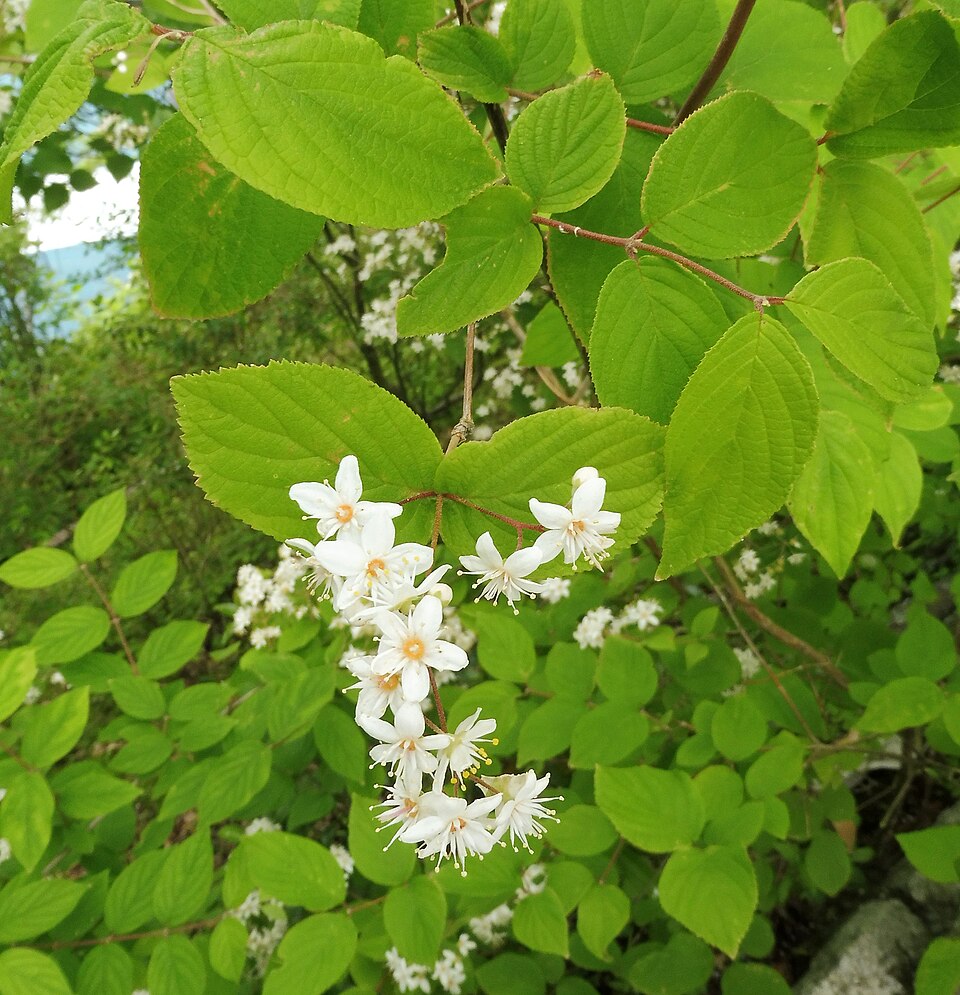
Viburnum plicatum is a deciduous shrub known for its distinctive pleated leaves and flat-topped white flower clusters blooming in spring. It produces blue-black berries in autumn that attract birds.
Basic info
Viburnum plicatum, commonly called Japanese Snowball Viburnum or Doublefile Viburnum, is a deciduous shrub native to East Asia, growing between 1.5 to 4 meters tall. It features a broad, rounded crown with characteristic pleated leaves. The shrub blooms in April and May with flat-topped clusters of white flowers that attract pollinating insects. Following flowering, it produces blue-black berries in autumn that serve as food for birds. It prefers full sun to partial shade and requires moderate watering. This species tolerates urban environments well and has low pruning needs, best pruned after flowering in early summer. It is widely used in gardens as a specimen plant or hedge.
Adapted to temperate climates, Viburnum plicatum withstands cold winters down to USDA zone 5. It thrives in well-drained, moderately fertile soils with neutral to slightly acidic pH. Young plants benefit from winter protection such as mulching. Propagation is possible by seed sowing in autumn or spring, and by semi-hardwood cuttings in late summer, with moderate difficulty.
Size & appearance
Environment needs
Care
Care for Viburnum plicatum involves planting in a sunny or partially shaded location with well-drained soil. Regular watering is important, especially during establishment and dry spells. Prune lightly after flowering to maintain shape and encourage growth. Fertilize once a year in early spring with organic or balanced fertilizer. Protect young plants in winter with mulch to prevent frost damage.
Propagation
Propagation can be done by seed sowing in autumn or spring, or by semi-hardwood cuttings taken in late summer. Grafting is less common. Propagation requires moderate skill and patience.
Diseases & pests
Generally resistant, but may occasionally be affected by aphids, scale insects, or powdery mildew. Good cultural practices and ventilation help prevent diseases. Use appropriate treatments if infestations occur.
Ehhez a növényhez még nincs betegség/kártevő információ rögzítve.
Safety
Viburnum plicatum is non-toxic to humans, dogs, and cats. It is not known to cause allergies, making it safe for family gardens.
Ecology
The flowers attract bees and other pollinators, while the berries provide food for birds in autumn, supporting garden biodiversity.
Usage
This shrub is valued in landscaping as an ornamental plant, suitable for hedges or as a specimen shrub in parks and gardens due to its attractive foliage and flowers.