Rex Begonia
Begonia rex
Más nevek: Painted-leaf Begonia, Fancy-leaf Begonia
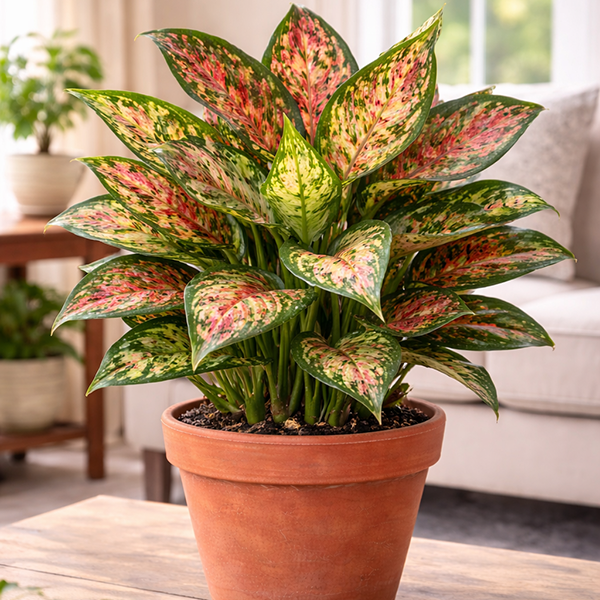
The Rex Begonia is a perennial, evergreen houseplant prized for its large, colorful, and patterned leaves. It has a moderate growth rate and prefers partial shade with moderate water needs.
Basic info
Rex Begonia (Begonia rex) belongs to the Begoniaceae family and originates from India and surrounding tropical regions. It is well-known for its strikingly large, colorful, and patterned leaves, which come in various shades and designs, making it a highly decorative plant. Typically, it grows to a height of 20-40 cm and can spread up to 50 cm wide.
This plant thrives in partial shade, avoiding direct strong sunlight that can damage its leaves. It prefers loose, well-draining, nutrient-rich soil with a slightly acidic to neutral pH. The Rex Begonia requires moderate watering, keeping the soil evenly moist but avoiding waterlogging to prevent root rot.
Its flowers are usually pink or white, blooming from May to September. The plant remains decorative during winter but is frost-sensitive and should be kept above 15°C. Propagation is commonly done through leaf or stem cuttings, which is of moderate difficulty. It is primarily grown indoors or on balconies rather than outdoors.
Size & appearance
Environment needs
Care
Caring for Rex Begonia requires moderate attention. It should be placed in a bright location with indirect light or partial shade. Keep the soil evenly moist but avoid overwatering to prevent root rot. Fertilize biweekly with a diluted liquid fertilizer from spring to autumn. During winter, reduce watering and maintain temperatures above 15°C.
Propagation
Propagation is usually done by leaf or stem cuttings. Leaf sections or entire leaves can be planted in loose, moist soil where they will root and develop new plants. The best time for propagation is spring or early summer when the plant is actively growing. Seed propagation is less common due to its slower and more challenging nature.
Diseases & pests
Rex Begonia is susceptible to root rot caused by overwatering. Pests such as aphids, spider mites, and powdery mildew may also affect it. Proper ventilation and avoiding excessive humidity are important. Remove affected leaves promptly and use appropriate plant protection products if necessary.
Ehhez a növényhez még nincs betegség/kártevő információ rögzítve.
Safety
Rex Begonia is moderately toxic to pets, especially dogs and cats, so it should be kept out of their reach. It is non-toxic to humans but may cause mild skin irritation in sensitive individuals upon contact.
Ecology
Rex Begonia is not native and is not considered invasive. It poses no ecological threat in indoor environments. In its natural habitat, it grows in tropical forest understories, contributing to biodiversity.
Usage
Primarily grown as an ornamental plant, Rex Begonia is popular in homes, offices, and shaded balconies due to its colorful, patterned leaves. It is not suitable for edible or medicinal use.