Potted Lavender
Lavandula angustifolia
Más nevek: English lavender, Lavandula angustifolia
Potted lavender is a fragrant, small-sized perennial shrub commonly grown as an ornamental and for its essential oils. It has a moderate growth rate and requires full sun exposure.
Basic info
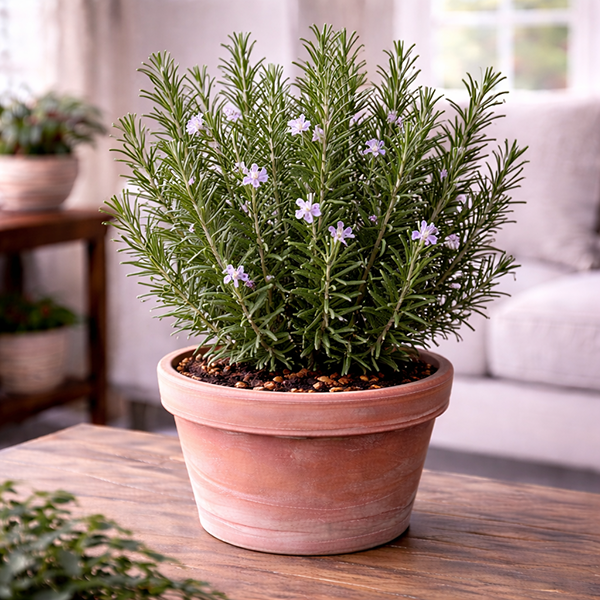
Potted lavender (Lavandula angustifolia) originates from the Mediterranean region and is a perennial, semi-evergreen shrub appreciated both indoors and in gardens. It features narrow, silvery-green leaves and purple flowers that emit a characteristic soothing fragrance. The plant typically grows 30-60 cm tall with a dense, bushy habit.
Its flowering period spans from June to August, with flowers arranged in long, slender spikes. Lavender tolerates drought well but dislikes overwatering, so well-drained soil is essential. During winter, it should be kept in a cool, bright place with reduced watering.
Care requires moderate attention, especially regarding pruning and watering. Pruning after flowering helps maintain shape and encourages new growth. Lavender is not only decorative but also useful, as its flowers and leaves are used as spices and for essential oil extraction.
Size & appearance
Environment needs
Care
For potted lavender care, provide a bright, sunny location as the plant prefers full sun. Water moderately, avoiding waterlogged soil to prevent root rot. Prune after flowering to keep a compact shape and stimulate new shoots. In winter, keep in a cool but frost-free place and reduce watering.
Propagation
Potted lavender is most commonly propagated by cuttings taken in mid-summer or early autumn. Cut healthy shoots and place them in moist soil. Seed propagation is possible but slower and more difficult. Division is less common.
Diseases & pests
Lavender is susceptible to root rot and powdery mildew, often caused by overwatering and poor ventilation. Good drainage and spacing are important. Pests include aphids, thrips, and spider mites, which can be controlled by natural or chemical means.
Ehhez a növényhez még nincs betegség/kártevő információ rögzítve.
Safety
Potted lavender is non-toxic to humans, dogs, and cats but may cause allergic reactions in sensitive individuals due to pollen. Allergic persons should handle with care.
Ecology
Lavender plays an important role as a food source for pollinators, especially bees and butterflies. Its essential oils have natural insect-repellent properties, aiding in pest control. Adapted to dry, sunny Mediterranean environments.
Usage
Lavender flowers and leaves are used as spices and for essential oil production. Its scent is calming and popular in aromatherapy. As an ornamental plant, it is favored on balconies and indoors for its beauty and fragrance. Dried flowers are used in potpourri.